You can spend an entire week preparing for your webinar and then screw up the whole thing because the webinar streaming platform you choose looks cheap or has technical problems. This is the part no one likes to talk about and why you Webinar streaming quality is crucial to getting it right.
The real issue with webinar stream quality is usually not your camera, lighting, audio or WiFi. It is the platform architecture of the live webinar platform you use to broadcast the event. This choice affects how your webinar looks, sounds, and attracts attention. Check out my full breakdown:
Key insights for high-quality webinar streaming
A successful webinar stream that delivers high-quality broadcast must accomplish four tasks simultaneously:
- Record your video and audio cleanly in the cloud and on your local device (in up to 4K resolution).
- Make your live virtual events professional with high-quality branded elements, graphics and scenes
- Keep your audience involved and engaged with interactive tools like polls, Q&As, and guest panels
- Leave marketing assets that you can reuse (short clips, blog posts, and email copy).
This is why a faulty webinar streaming setup can destroy both the live event, your replay, and all downstream content. If you use your webinar tech stack correctly, a webinar can be turned into a recording, clips, blog post, and newsletter in one go.
As you can see in my full video walkthrough above, I use Riverside to host all of my webinar streams when I go live on my YouTube channel. You can use the code RyanR to get a free month of the full-featured webinar plan.
Get the webinar and recording tool of your choice: Riverside
Riverside is my preferred platform for hosting webinars, livestreams, podcast interviews, and meetings with my team. Your studio tools are great. If you create video content, I highly recommend it. Plus, you can try it for free.
Why some webinars fail the technical test
Imagine this: you have 100 people registered, your slides are cramped, and then the live feed turns into a blurry mess that lacks the HD video quality attendees expect. The sound sounds thin. The stream buffers every 30 seconds.
Most viewers aren’t waiting to see if things improve, especially since standard video conferencing tools often fail to capture attention during high-risk webinars. They disappear quickly, often within the first minute, and that means a room full of leads disappear before you even reach your sweet spot.
“This company is out of control.” That’s what people think when the power goes down. Not: “Your internet is slow.”
4 Webinar Streaming Quality Benchmarks to Host a Better Webinar
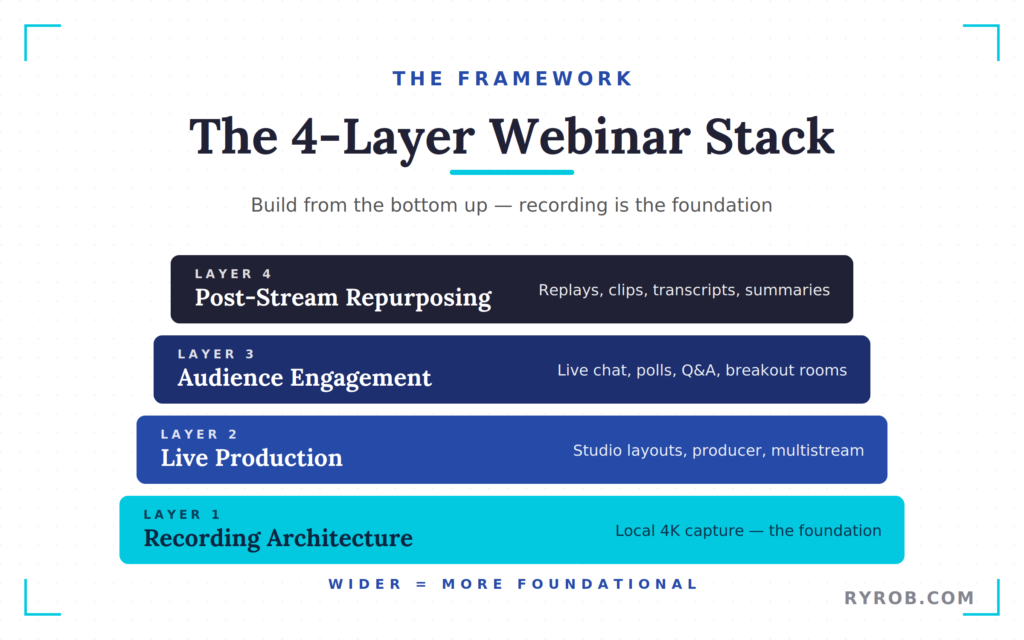
I divide webinar streaming into four levels because one solution alone is not enough.
- Recording architecture that forms the basis.
- Live production that gives the event an elegant look.
- Audience engagement that keeps people active.
- Post-stream repurposing that gives the webinar a second life and adds value to long-term marketing workflows.
This is the model I like because it keeps the entire workflow in view, unlike simple virtual meetings that only focus on the moment you go live.
Layer 1: Webinar streaming architecture
Most webinar tools send your camera feed to the cloud, process it on their servers, and then send it back to the audience.
If your connection stumbles, the stream also stumbles. If the live version looks bad, the recording usually looks bad too.
Webinar streaming tools like Riverside take a different approach. Their platform records locally on each participant’s device in up to 4K quality and simultaneously broadcasts the live stream to viewers.
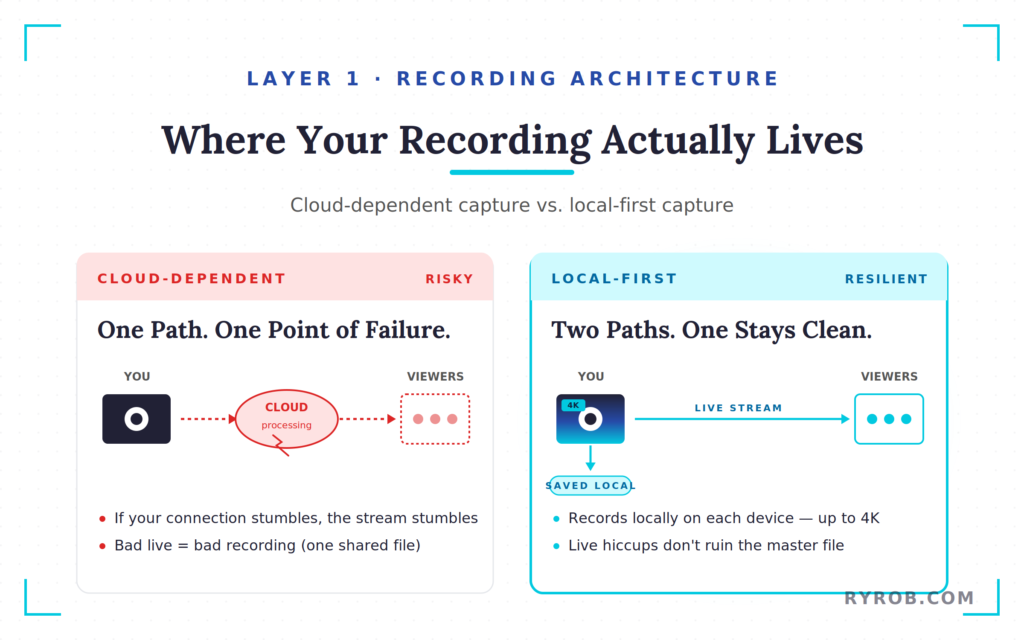
This means your recording will stay clean even if the live connection hits a rough patch. Riverside also maintains high security standards, ensuring that local 4K recording is never affected by connection drops.
If you want a more detailed breakdown of this workflow, Riverside’s guide to live streaming shows the same simple setup from start to finish.
Level 2: Make the live webinar look intentionally great
Once the recording architecture is solid, the next step is to nail down your live presentation elements.
In Riverside, you can create a studio with your own custom branding and different layouts for speaker view, slides, gallery view, or screen sharing. It has a super clean user interface.
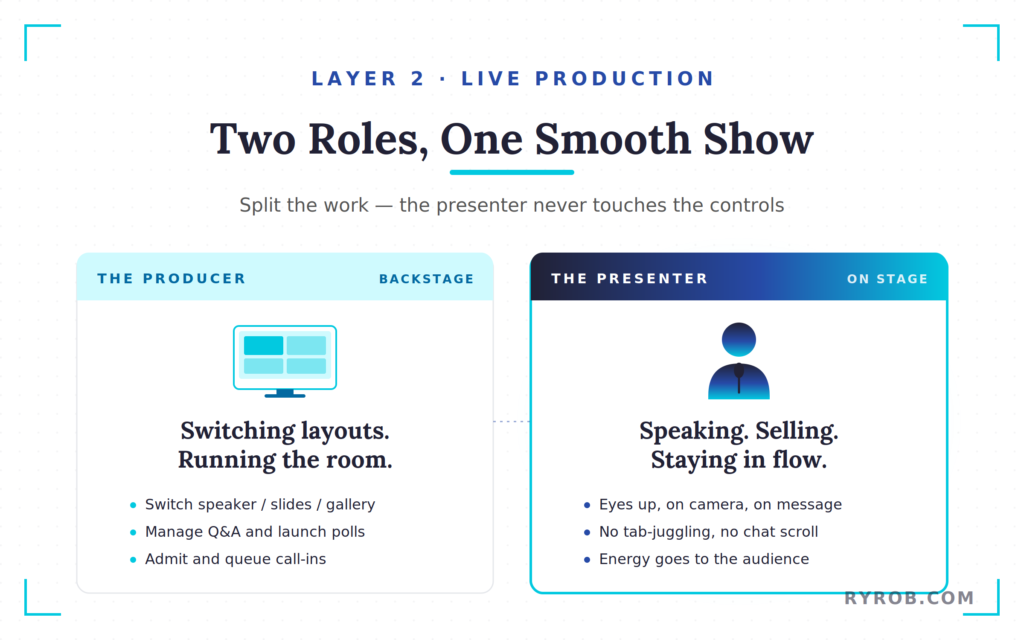
The producer’s role is important here when working with someone to assist you with your webinars. Your producer can manage all of these tools for backstage work, switching layouts, conducting Q&As, starting polls and allowing calls, while the presenter can remain focused on speaking and delivering the message.
The same browser-based setup also simplifies multistreaming.
You can send a webinar for social media broadcast to YouTube, LinkedIn, Facebook, or a custom RTMP destination without putting together a bunch of additional tools.
Level 3: Engage your live webinar audience
Quality isn’t just about camera resolution, lighting and audio. A webinar can look good and still fail if no one interacts during your stream.
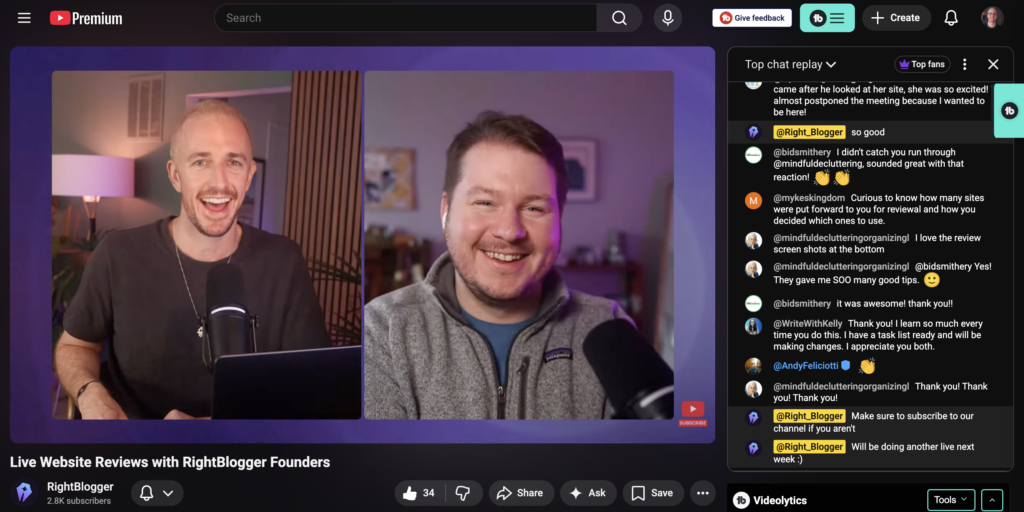
Riverside integrates live chat, polls and Q&A, as well as interactive features such as breakout rooms to engage participants. This gives you real opportunities to engage the audience in the session rather than just talking at them for an hour.
It also helps in lead generation. Registration pages can be used to track where people came from and how long they stayed. You can export this data or sync it via CRM integrations with tools like HubSpot or Salesforce.
Level 4: Turn a webinar into a content library
This is where the true payoff becomes apparent. The best webinar tools don’t stop when the stream ends, but give you a usable recording immediately.
With webinar streaming tools like Riverside, you can trim the intro, cut out dead spots, add subtitles, clean up the audio, and even incorporate pre-recorded content to polish the final version all in the same place. Then AI tools like Magic Clips can bring out the strongest moments for short videos.
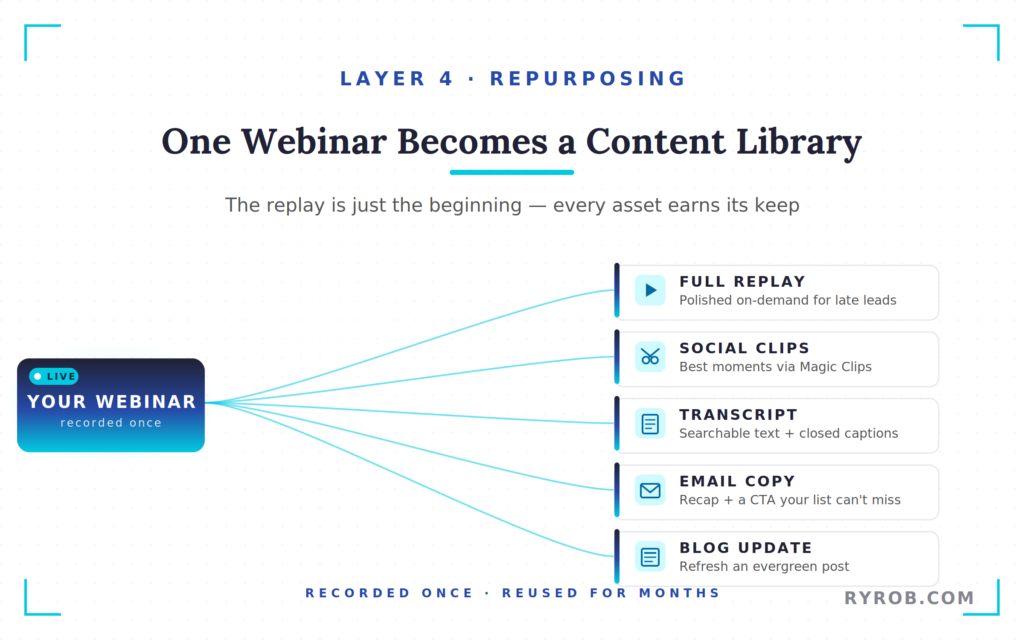
This means a webinar can become a polished full replay that serves as a high-quality, on-demand webinar for late-arriving leads, a few social clips, a transcript for video reuse, and a recap that you can turn into an email copy or post update. If you’re already publishing and updating content, this fits right in with republishing and updating blog posts.
Common webinar mistakes that keep popping up
The errors are usually of a fundamental nature. Wrong time zones. Not a producer. Separate tools for recording and editing. No plan what happens after the live event ends. Lack of dedicated customer support. Confusing workflows.
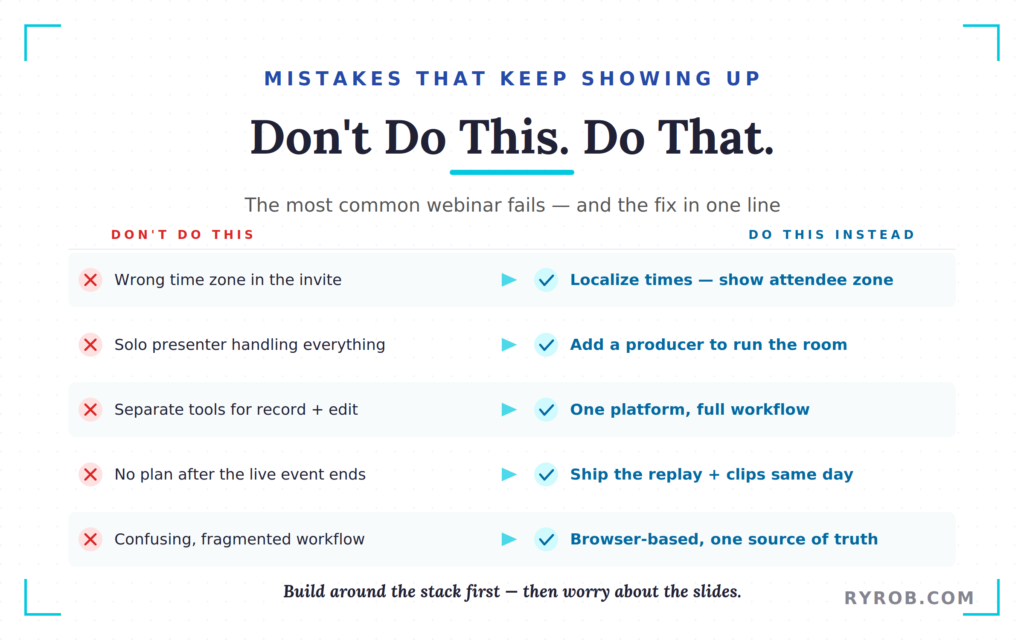
If you want a cleaner process, start with a platform that handles the entire process, including online training, hybrid webinars, or even automated webinars. Riverside’s Webinar Setup Guide walks through this workflow in more detail.
Webinar Streaming Quality FAQs
Here are some of the most common questions I get about running high-quality webinar streams.
Do I need a full production team to host a webinar?
No. A solo setup is perfect for product demos and can work well if the platform gives you recordings, layouts, producer controls, and repurposing tools in one place. Tools like Riverside and Streamyard are great options for solo hosted webinar streams.
Can I use a webinar recording after the live event?
Yes, and you should too. The recording, transcript, clips, and summary are often more useful than the live session itself. The content you create during your webinar can now be shared in other formats across your social channels, blog, and newsletter.
How do I track webinar performance?
Webinar tools like Riverside and Streamyard have an analytics dashboard to monitor key metrics like views and participation. Surveys and Q&A data provide valuable insights into audience engagement and feedback.
Final takeaways for higher quality webinar streaming in 2026
A bad webinar is usually not a content problem. It’s a setup problem. Once the architecture of a professional live webinar platform is right, the live show feels calmer, the audience stays longer and the repetition is worth it.
If you want your next webinar to look elegant without becoming technical, build the stack first and then worry about the slides.
If you want to try the same workflow, Riverside’s webinar plan gets you started easily with a free trial and code RyanR Get one month free for the full-featured webinar plan. Enjoy!
Get the webinar and recording tool of your choice: Riverside
Riverside is my preferred platform for hosting webinars, livestreams, podcast interviews, and meetings with my team. Your studio tools are great. If you create video content, I highly recommend it. Plus, you can try it for free.
PakarPBN
A Private Blog Network (PBN) is a collection of websites that are controlled by a single individual or organization and used primarily to build backlinks to a “money site” in order to influence its ranking in search engines such as Google. The core idea behind a PBN is based on the importance of backlinks in Google’s ranking algorithm. Since Google views backlinks as signals of authority and trust, some website owners attempt to artificially create these signals through a controlled network of sites.
In a typical PBN setup, the owner acquires expired or aged domains that already have existing authority, backlinks, and history. These domains are rebuilt with new content and hosted separately, often using different IP addresses, hosting providers, themes, and ownership details to make them appear unrelated. Within the content published on these sites, links are strategically placed that point to the main website the owner wants to rank higher. By doing this, the owner attempts to pass link equity (also known as “link juice”) from the PBN sites to the target website.
The purpose of a PBN is to give the impression that the target website is naturally earning links from multiple independent sources. If done effectively, this can temporarily improve keyword rankings, increase organic visibility, and drive more traffic from search results.